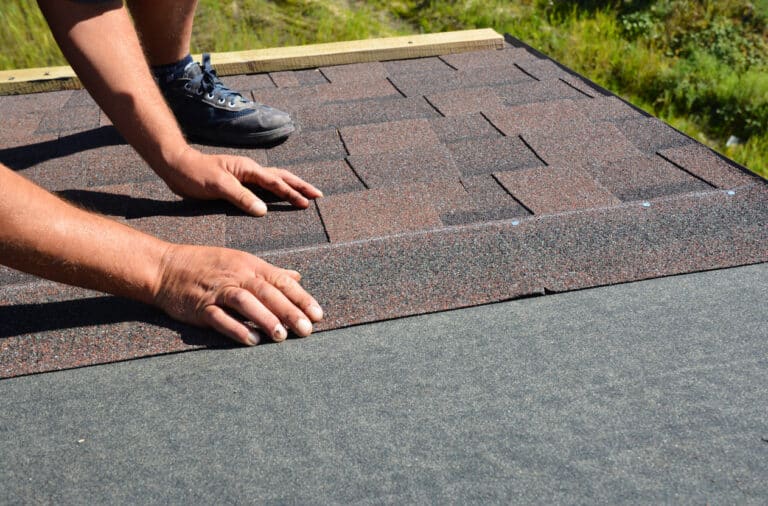
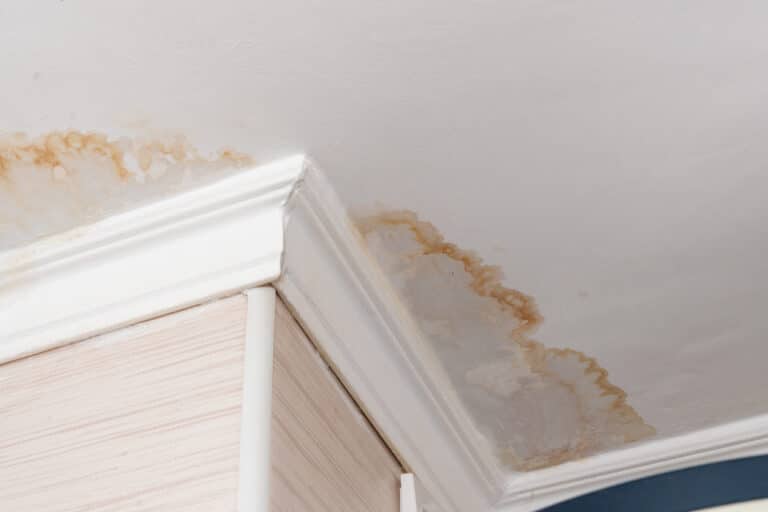
For the overall health of your roof, the granules that coat the surface of your asphalt shingles play an important role.
To understand what they do and how they indicate how well your roof is aging, let’s first look at how asphalt shingles are manufactured.
The Manufacturing Process
Asphalt shingles are manufactured using a layering process to provide strength, flexibility, and weather resistance.
1. The base starts with a strong mat, usually made of organic felt or durable fiberglass, that is unrolled to form the core.
2. Next, the mat passes through a coater where it is saturated with hot, refined asphalt mixed with stabilizers such as finely crushed limestone, to provide a waterproof, fire-resistant coating.
3. The third stage occurs when the granules are added while the asphalt coating is still hot. A heavy layer of mineral-based granules is applied, and heavy pressure rollers press them into the sticky surface.
4. Finally, the sheet is cooled with water sprays, treated with a back-surface agent to prevent sticking, fitted with adhesive sealant strips, and then cut into individual pieces.
What They Do, and Why the Granules Matter?
In addition to providing color and durability, they offer the ultimate UV-ray protection.
Radiation from the sun rapidly breaks down and dries out asphalt. The granules block UV rays from reaching the asphalt layer beneath, substantially increasing your roof’s lifespan.
Shingle granules also help absorb the physical shock of heavy rain, hail, and windblown debris to prevent damage to the softer, underlying material of the shingle.
The granules are non-combustible, helping prevent flames from igniting the asphalt and giving most shingles a high fire rating.
Finally, the rough texture of the granules helps channel water down toward the gutters, and light-colored shingles are reflective, bouncing solar heat back into the atmosphere to keep your house cooler.
Understanding Normal Granule Loss vs Excessive Loss
Shingle granule loss is a part of your roof’s aging process, but understanding what is normal and what is excessive will give you an indication of roof damage that should be addressed.
Normal weather and thermal expansion: As your roof heats during the day and cools overnight, your shingles expand and contract.
This constant movement causes some granules to become loose and wash into your gutters during a rainstorm.
Over time, natural aging wears down the asphalt coating that holds the granules in place.
Normal aging: Granule loss after a new roof installation is normal, and gradual loss that looks like loose sand in your gutters after a heavy rain is also normal aging. The shedding is light.
Red flags for premature aging and roof damage include excessive shingle granule loss, such as large mounds in your gutters, or visible bald spots on your roof.
If you notice excessive shedding, consulting a professional immediately is the best course of action.
Southern National Roofing offers free inspections to help you assess the health of your roof and maintain its longevity.